Understanding the map
Printable Hand Position Charts
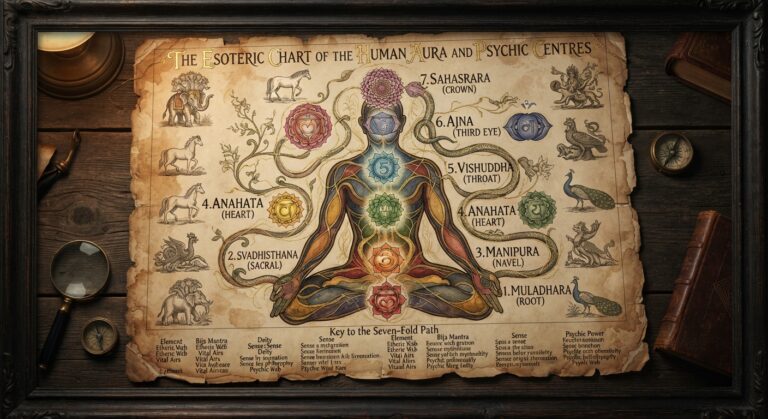
What the seven-point hand-position map represents, and why Reiki treatment traditionally follows this particular path through the body.
Why Seven Points
Reiki’s standard hand positions map onto the same seven points used in chakra systems, running from the crown of the head down to the base of the spine. This isn’t an arbitrary sequence — each point corresponds to a centre traditionally associated with a different aspect of a person’s physical, emotional or mental life, and treating them in order is meant to move steadily through the whole system rather than favouring one area.
To save this chart as a PDF: open your browser’s print menu (Ctrl/Cmd + P) and choose “Save as PDF.” The navigation links above are hidden automatically when printing.
Why Full-Body Self-Treatment Moves Top to Bottom
Self-treatment is generally the first form of practice most people learn, and it follows the same seven points as the chart above, from Crown down to Root. The logic behind that direction is simple: it lets a person work through the whole system methodically in one sitting, rather than jumping between areas.
The positions themselves reflect what’s practical when treating your own body — palms resting on the crown of the head, cupped lightly over the eyes for the Third Eye, at the base of the throat, crossed over the chest for the Heart, flat above and below the navel for the Solar Plexus and Sacral, and finally resting on the lower abdomen or thighs for the Root. Each is held for several minutes, giving the area time to register the treatment rather than moving through it too quickly.
Why Client Sessions Differ From Self-Treatment
The same seven points still apply when treating a client, but the approach shifts in a few important ways. Hands are typically held just above the body rather than resting with full weight, since a client lying down is more exposed than a practitioner treating themselves seated and in control of their own contact.
Crown, Third Eye and either side of the head are treated with particular care, since this is the area where light contact near the face matters most to a client’s comfort.
Throat, Heart, Solar Plexus and Sacral are usually worked with hands hovering rather than touching, given how exposed the chest and stomach can feel while lying down.
The Root position is held above rather than on the hips or thighs for the same reason, and sessions often end with a light position at the feet — a natural, recognisable signal that the treatment is complete.
A Map, Not a Rulebook
The seven-point structure exists to keep a session oriented, not to dictate it precisely. Many practitioners spend longer over an area where they sense it’s needed, or leave one out entirely if it doesn’t feel right that day. The chart describes the shape most sessions take — not a fixed script every session must follow.